
Building Pads and Grading for Homes, Barns, and Shops Across Central Arkansas
Once the slab is poured, you never see the pad again. You just live on top of what it does. Dirt Work Innovations builds house pads, barn pads, and shop pads, and handles the grading and leveling around them, out of Heber Springs and across Cleburne, Van Buren, White, and Faulkner County.
Request a Quote
Tell us what you have and what you want on it.
We come look at the ground before anyone talks numbers.
Types of Pad and Grading Work We Get Called For
Every structure needs ground prepared to carry it. These are the jobs we build most.
House Pads for New Homes
- Foundation pads for site-built and custom homes
- Built to the footprint and elevation on your plan
- Ground under the slab prepared to stay put
Pads for Barns, Shops, and Outbuildings
- Pads for pole barns, workshops, and equipment sheds
- Sized for the concrete and the loads coming later
- Farm structures set high and dry
Land Grading and Leveling
- Yards, lots, and acreage graded smooth and true
- Slopes eased and low spots brought up
- Finish grading that sends water where it should go
Fill Dirt and Compaction
- Fill brought in, placed, and packed correctly
- Low or soft ground built up to usable elevation
- Compaction done as the fill rises, never after
One Contract From Raw Land to Build-Ready
Central Arkansas clay will not compact wet, so the pad has to go in when the ground will hold it, which puts every phase around it on the same clock. We handle the clearing before and the driveway and drainage after, on one estimate, so the ground work connects instead of colliding.
The pad gets located with the whole property in mind. Where the drive comes in, where water runs, and where the ground is strongest all get a say.
The dirt under the pad gets dealt with first. Roots, soft spots, and bad fill come out before good fill goes in.
Water is planned before concrete is scheduled. The finished pad sheds rain away from the build, and the drainage around it is already in the same plan.
How We Work a Site
- 1
Built in Lifts
Fill goes in layer by layer, each one packed before the next goes down, because a pad compacted only on top is loose in the middle.
- 2
Moisture Has a Say
Dirt packs right in a narrow moisture window, so we work the fill when it will actually hold, wet seasons and dry spells included.
- 3
Graded to Shed
Every pad leaves crowned or sloped so rain runs off it, because a pad that ponds water is soft ground waiting to happen.
- 4
Checked Before Handoff
Elevation and level get verified before we call it done, so the crew forming the slab starts from a pad that matches the plan.
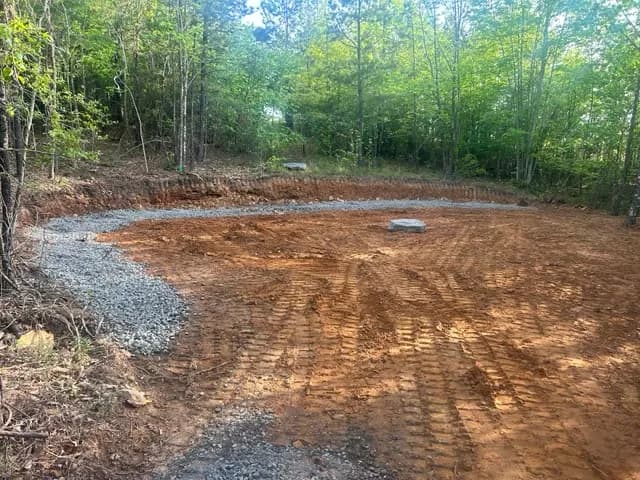
A Bad Building Pad Will Cost You Later
Everything you build sits directly on the pad. On Cleburne County ground the soil often runs shallow over rock, so where the pad can sit is a real decision, and moving it drags the drive and the drainage along with it. We handle all three on one estimate.
Loose fill settles under load.
The slab follows it down, and the first sign is usually a crack running across your floor or a door that stops closing.
Clay moves with the weather.
The soil around here swells wet and shrinks dry, and a pad built without accounting for it lifts and drops the building through every season.
A pad set too low collects the whole yard's water.
Once the structure is standing on it, raising the ground underneath is no longer on the menu.
Grading and Building Pads For Heber Springs and the Lakes Region
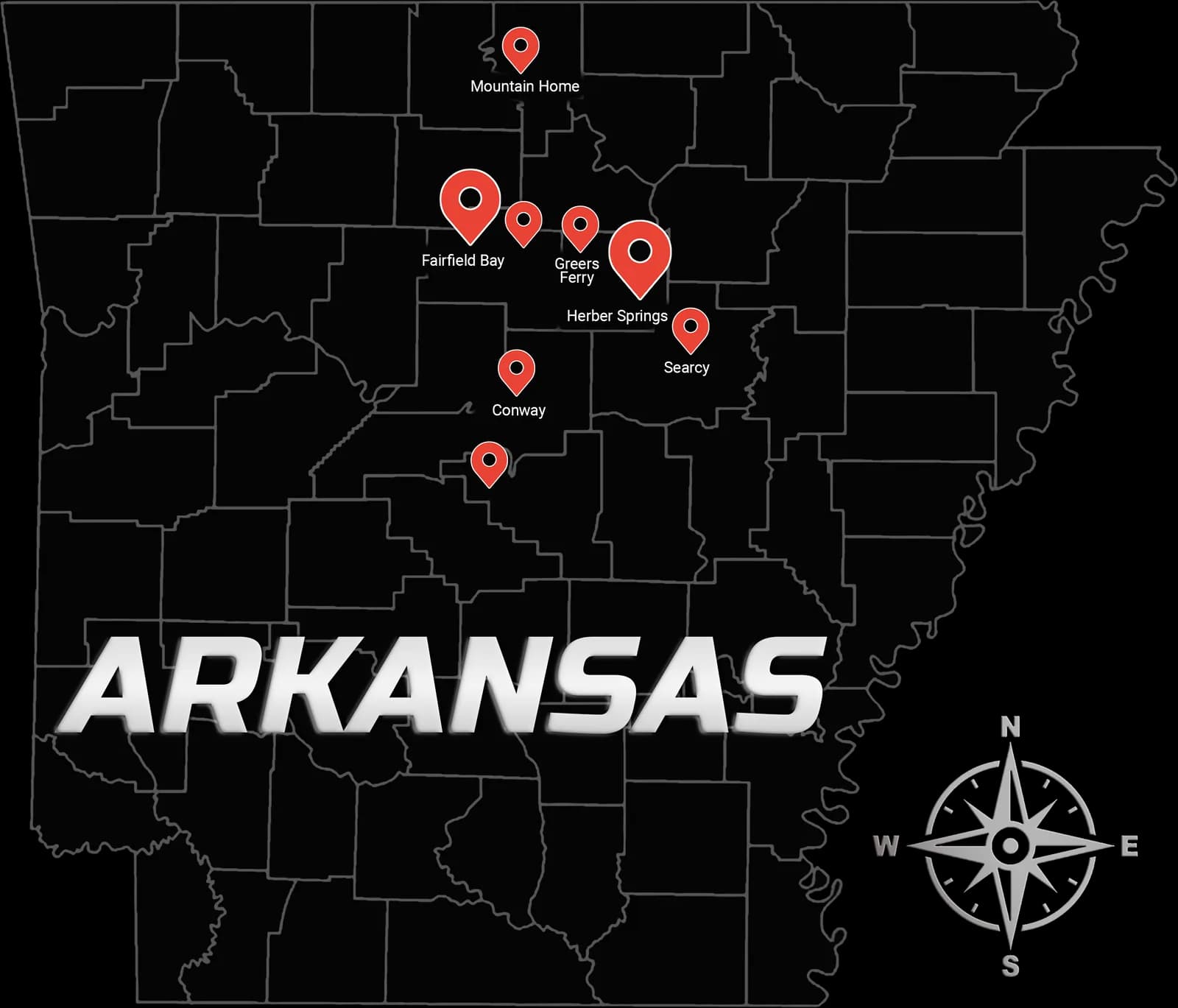
Building pads, grading, and leveling on home sites, farms, and rural property throughout Cleburne, Van Buren, White, and Faulkner County, based in Heber Springs and covering the communities around Greers Ferry Lake.
Primary Service Areas
- Heber Springs
- Greers Ferry
- Fairfield Bay
- Clinton
We Also Serve
- Quitman
- Searcy
- Conway
- Bentonville
- Mountain Home
- Rural communities within about an hour of Heber Springs
Common Questions We Get About Pads and Grading
What landowners and builders ask before the pad goes in.
How much does a building pad cost in Arkansas?
The price follows the size of the pad, how much fill it takes to reach the right elevation, what condition the ground is in underneath, and how far material has to move to get there. A pad on firm, level ground near the road is a small job. The same pad on a slope with soft soil and a long haul for fill is a different quote entirely. We walk the site, check what is under the surface, and put the real number in a written, itemized estimate.
How is a house pad built?
The footprint gets cleared and stripped of anything that does not belong under a foundation, including roots, topsoil, and soft material. Then fill goes in as compacted lifts, one layer at a time, up to the plan elevation. The finished pad gets shaped to shed water and checked for level before anyone schedules concrete. The steps are simple to list and easy to shortcut, and the difference between the two shows up about two years after move-in.
Do you do grading without building a pad?
Yes. Grading and leveling stand on their own: rough yards smoothed out, lots leveled for future plans, slopes eased for mowing and access, low spots that hold water brought up to grade. If the ground on your property has shape problems, that is a job on its own, no structure required.
When should the pad be built?
After clearing and before everything else, with one caution: a fresh pad should not become the parking lot for the build. Concrete trucks and delivery loads driving over the edges of a finished pad break down work you already paid for, so the access road needs to be ready to carry that traffic first. It is a sequencing question, and it is exactly why we quote pads, drives, and drainage as one plan.
What areas do you serve for pads and grading?
Home base is Heber Springs, and the working range covers Cleburne, Van Buren, White, and Faulkner County: Greers Ferry, Fairfield Bay, Clinton, Quitman, Searcy, Conway, and the rural land between them. Bentonville and Mountain Home property owners with land in our area, we take those calls too. Not sure if you are in range? Ask, and you will know in one phone call.
Tell Us What You're Putting on the Ground
Describe the structure, the site, and the timeline. You will get back a straight answer, a site visit, and a number you can plan around.
Call Us · (501) 306-9932